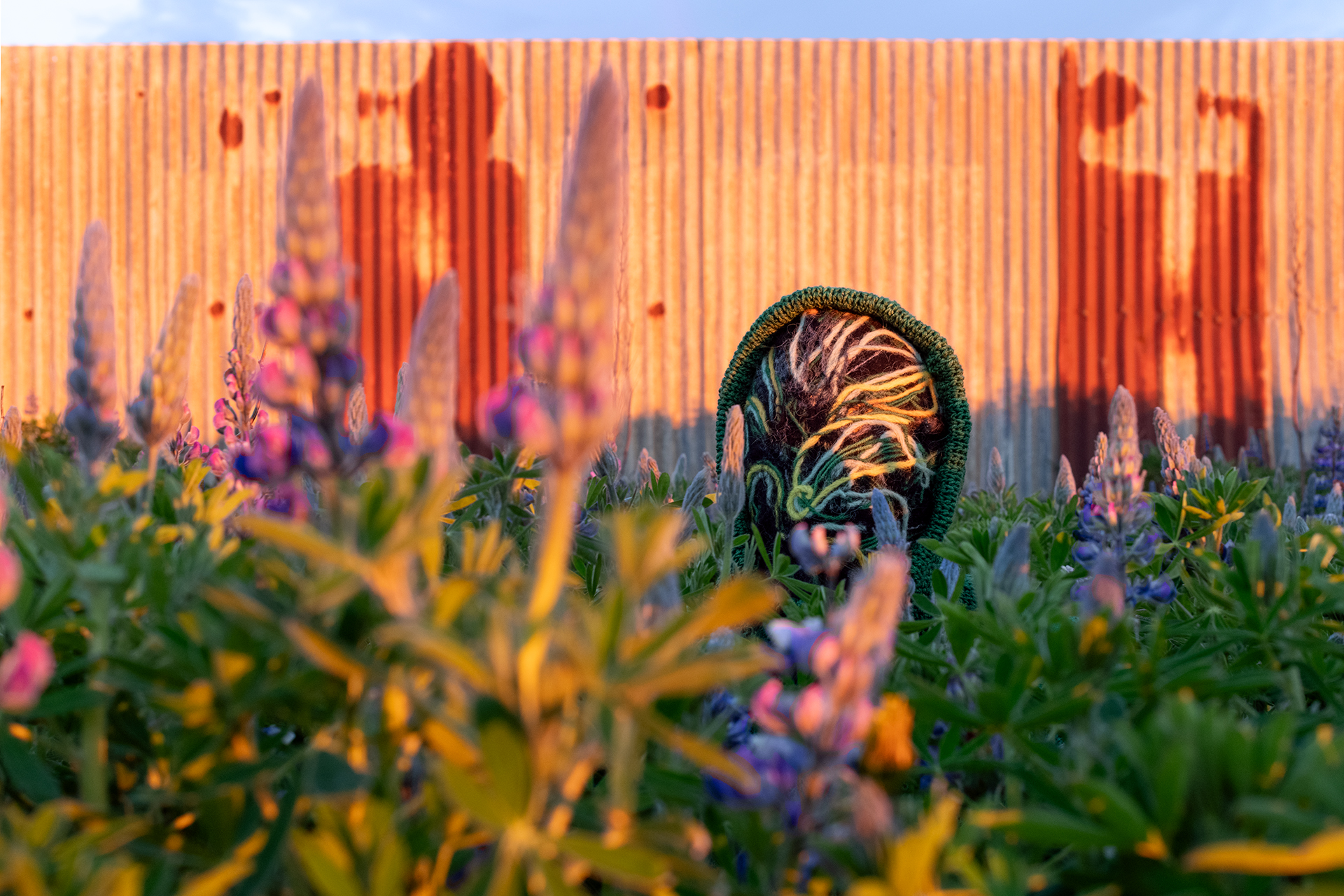
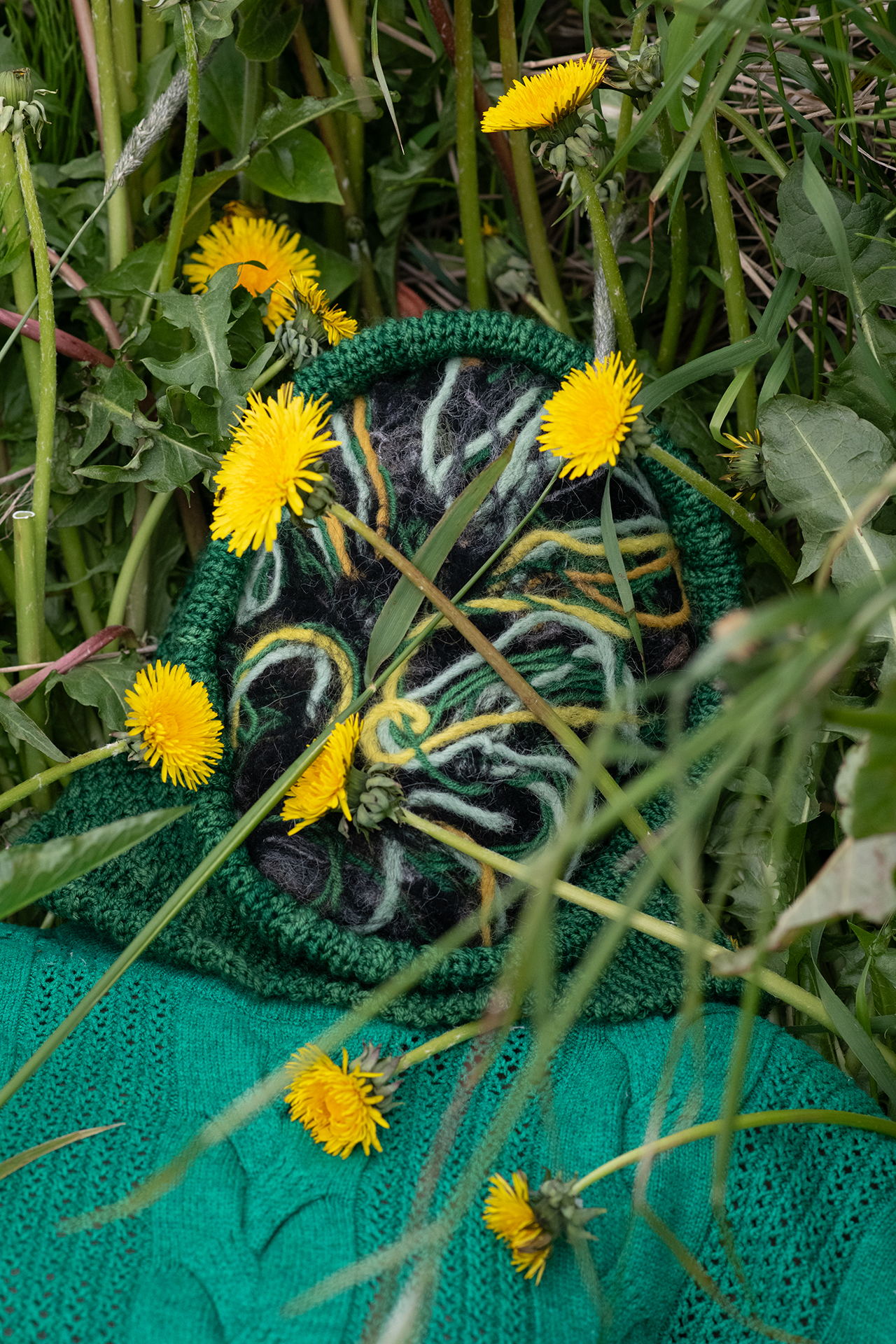
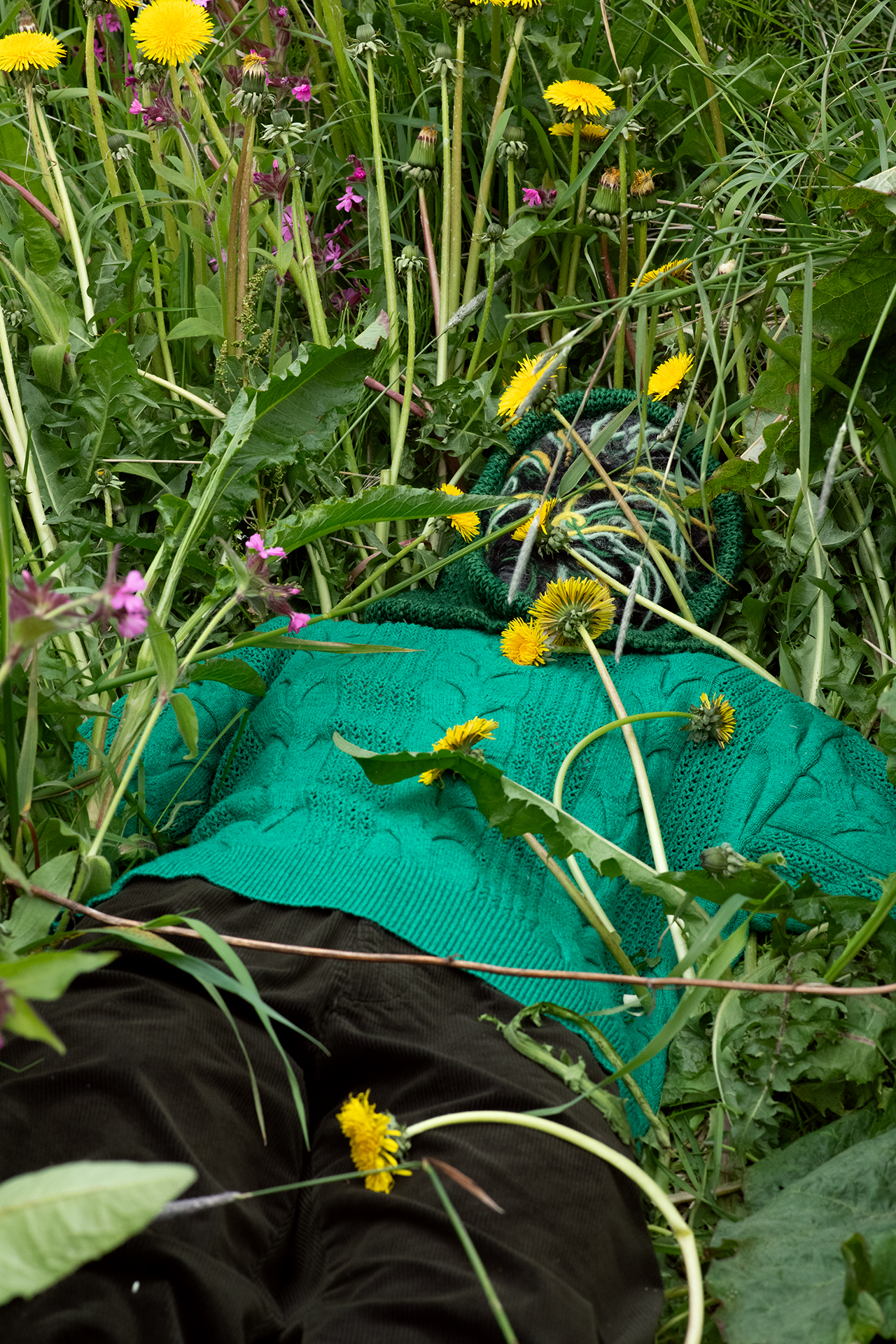
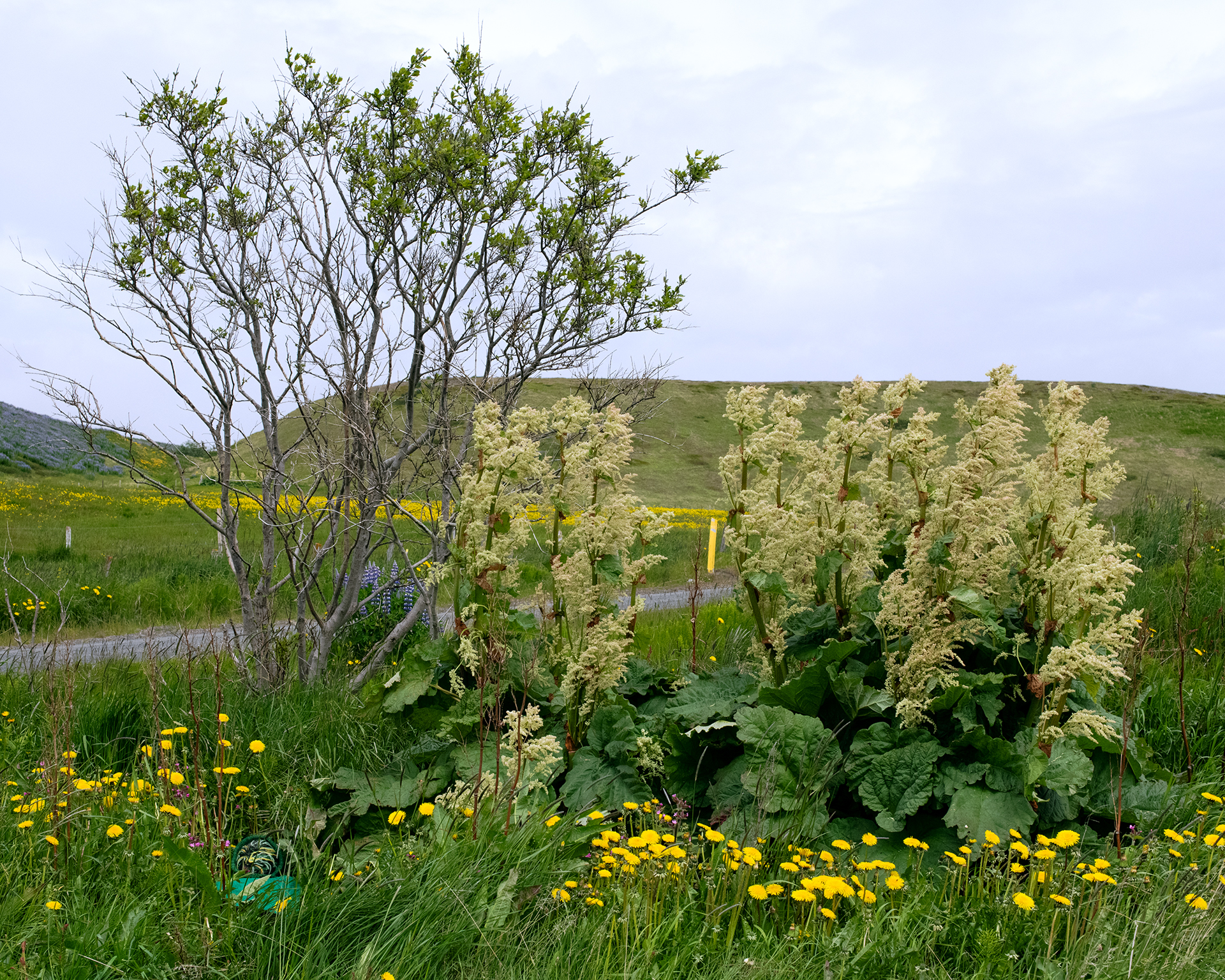
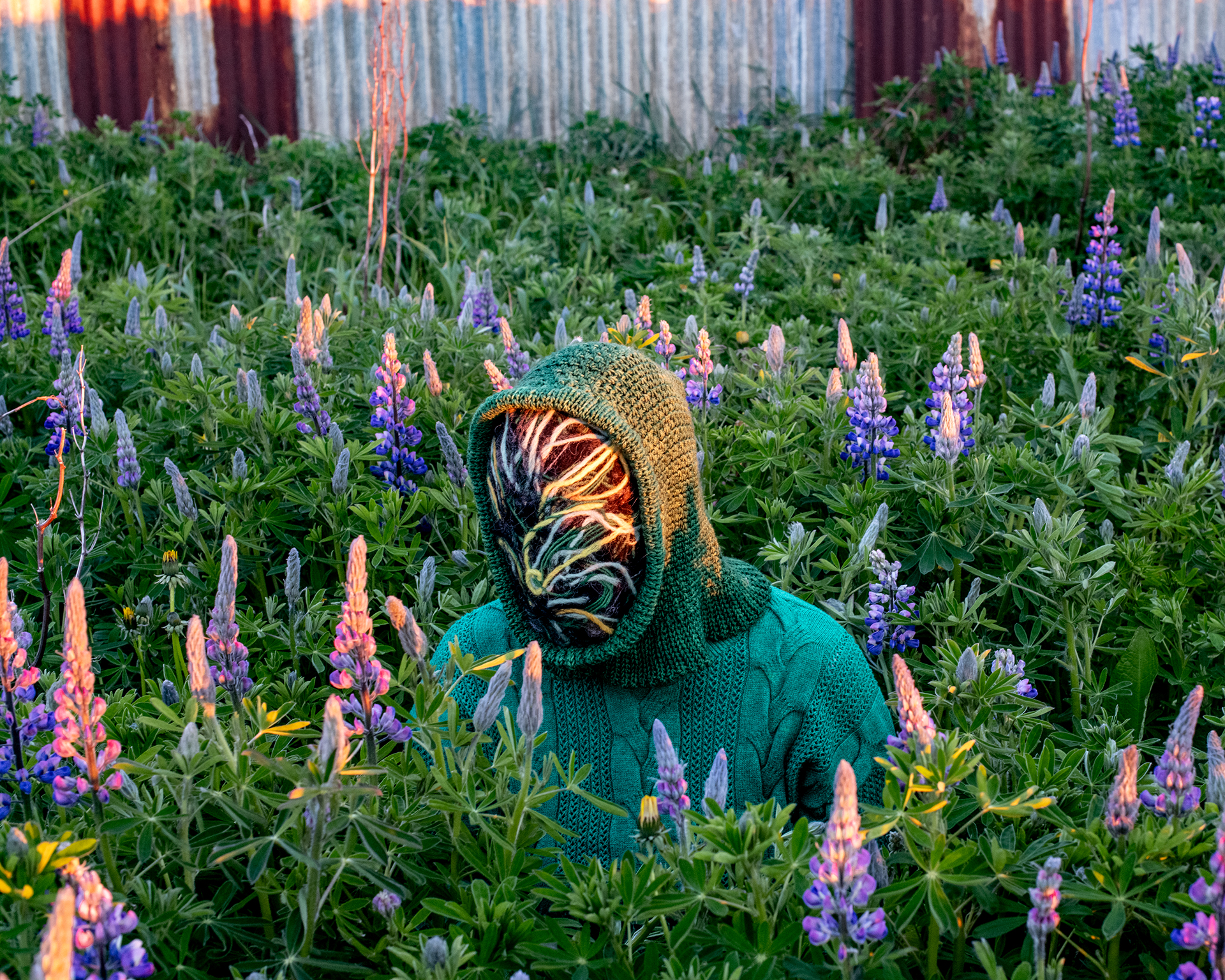
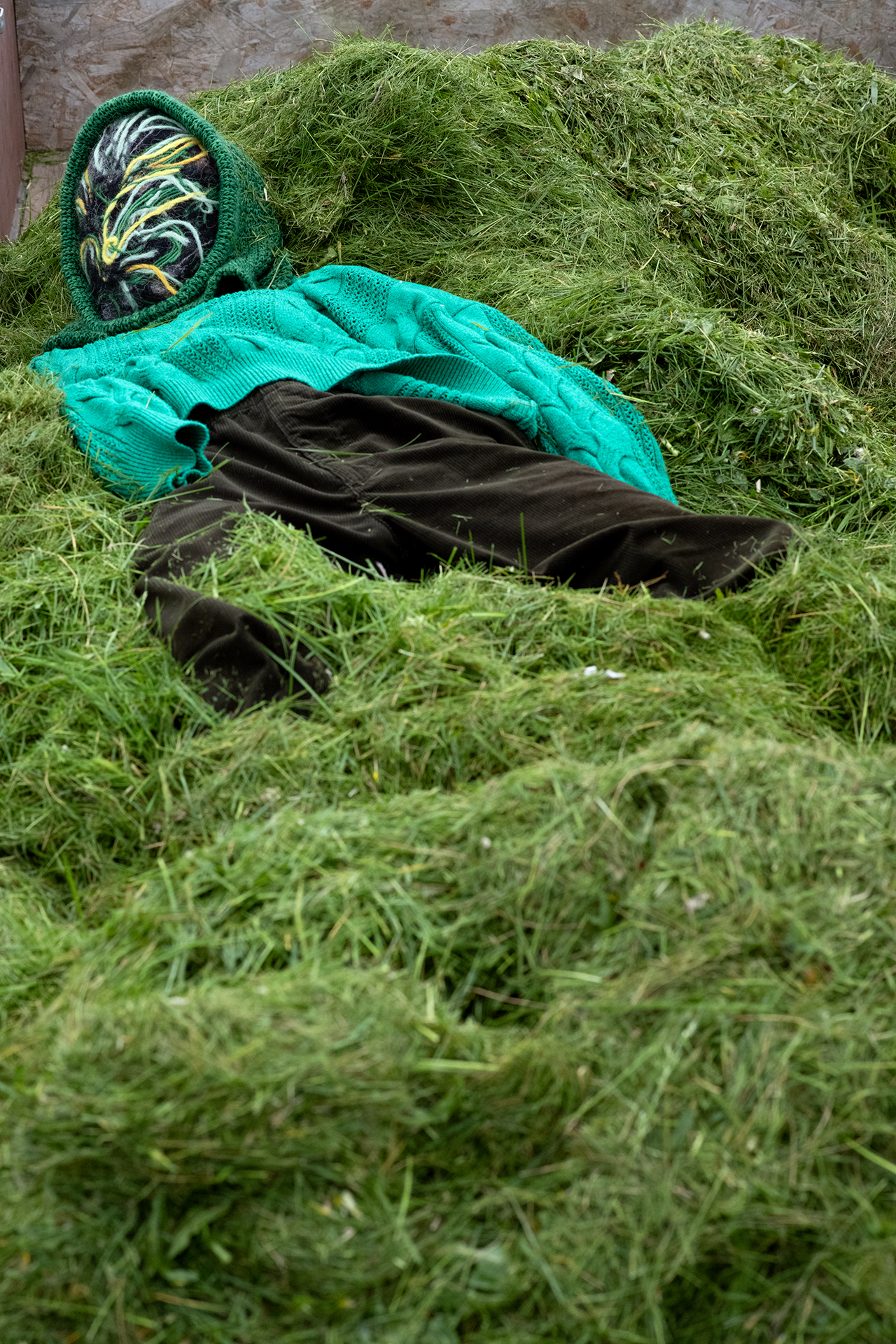
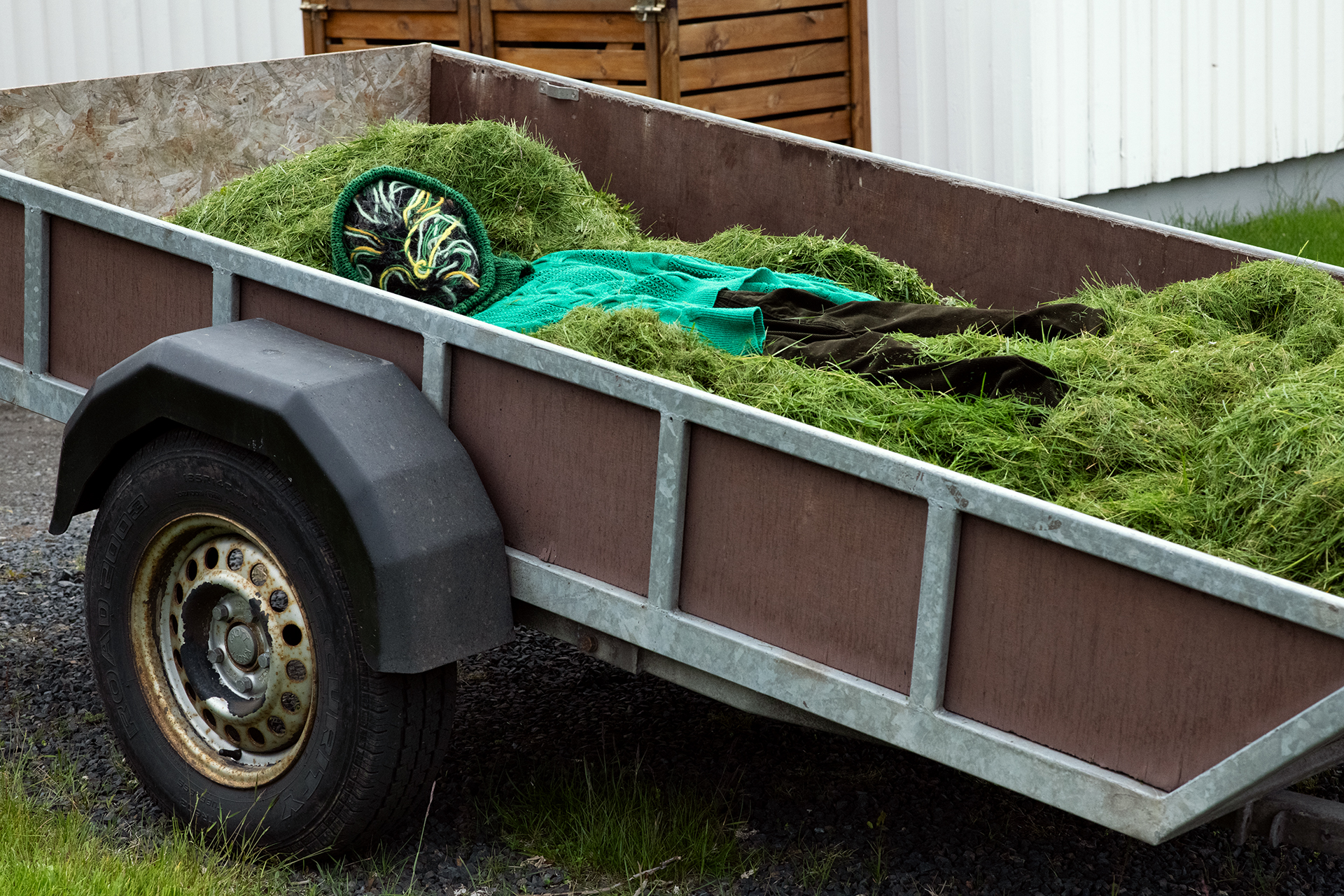
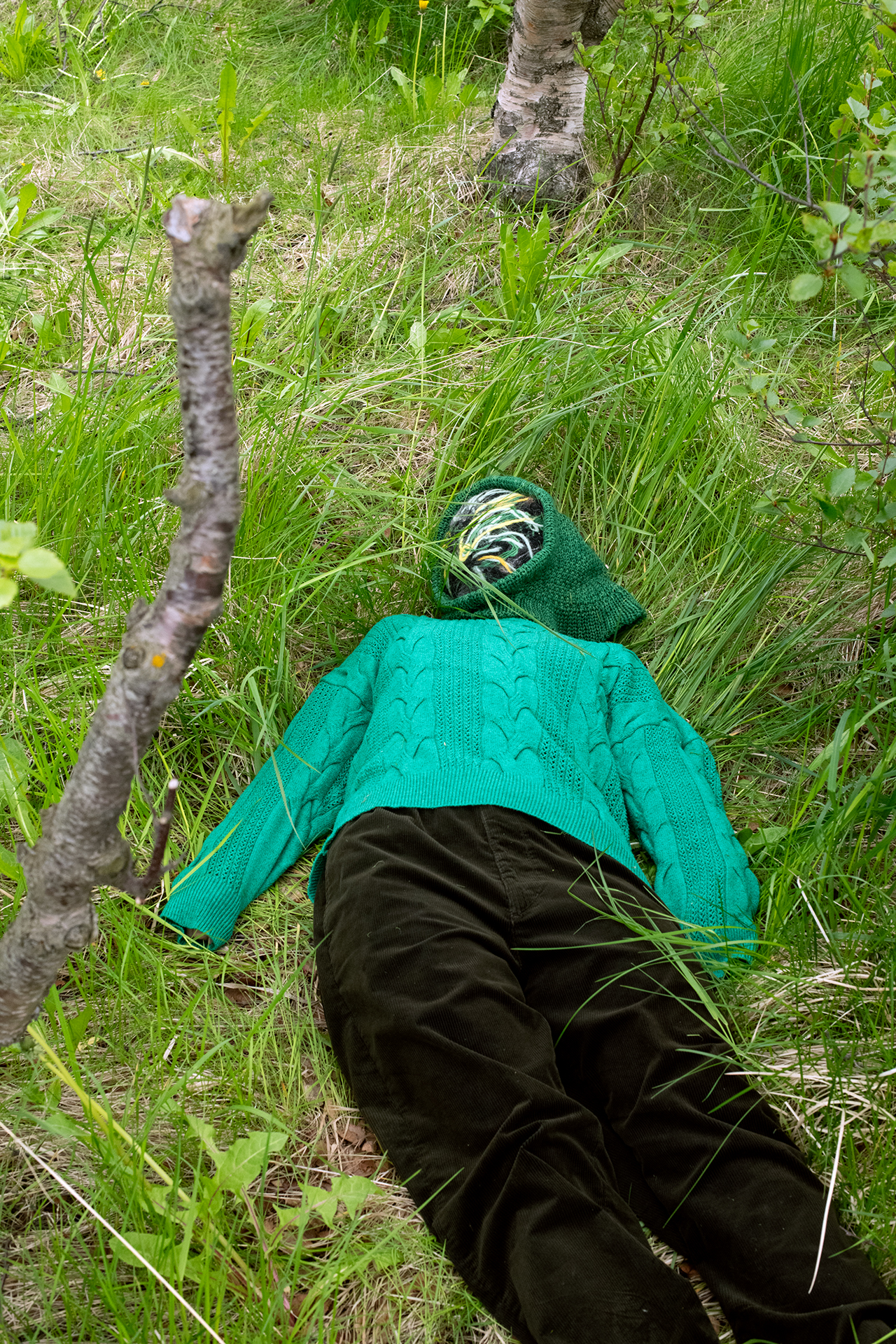
Digital photographs of models wearing hand crocheted hood with felted mask insert made from lopi yarn, wool and miscellaneous fibres. Captured in Blönduós, Iceland, June 2024.
To put on a mask usually means to become someone else; to step into their shoes and adopt a persona, a character, a likeness unlike yours, that sometimes allows you to express yourself more than regular old you without the mask. But what if instead of becoming someone else or a different version of yourself, you became no one? Became a space or something in-between: a sidewalk, a lamppost, the grass in your front yard? A space often attributed to nature, when it’s not functioning as an awe-some backdrop for your next selfie.
I invite you to put on this mask, hand crocheted and felted on a felt loom, and lie down in the grass. Try and be present with the grass and allow yourself to be held by it. Undistracted by your vision, what can you hear, feel, smell? Relax the muscles in your face or make a weird face if you want: no one can see you. What is it like to be unseen? No one and therefore everything. I can take your picture wearing the mask if you like, though I doubt it will be a picture of you, for you will likely have become grass at that point.
______
With this project, I am interested in investigating the possibility of blending into one’s natural environment and blurring the line between figure and ground, subject and backdrop. Returning to crochet for the first time since I was a teenager, this project is a continuation of my interest in masquerade and the transformation of self into image through photography.
Seen or photographed from the outside, the mask attempts to camouflage the wearer, while inevitably failing to do so. Stripped of facial identity markers, the wearer uncannily becomes obliterated, their head transformed into a container: anyone could be inside. A kind of immortality is reached: instead of becoming a character, the mask wearer approaches something eternal by becoming grass. Felt from the inside, the vision restricting mask invites the wearer to tune into sound, touch and smell. They simultaneously become invisible and hypervisible at the same time, engaging in a sometimes fun, sometimes creepy form of self-effacement.
Initially, I thought the photographs taken of myself or others wearing the mask would be the final artwork. But in constructing the mask, putting it on and being inside it and the sensory deprivation it creates; in seeing and photographing others wearing it while also donning my clothes, I have realized that this project is not just about constructing an image but sharing the act of wearing it. When more people inhabit the mask, the stronger the project becomes, the more we collectively become grass.
 NICOLE CROZIER